How this site works: Azure Static Web Apps, Terraform and OIDC
This site is a static React app, but everything around it is the part I actually care about: the infrastructure is code, the deploys are keyless, and the visitor counter you see on the home page is a real serverless function hitting real storage. This post walks through how the pieces fit.
The shape of the system#
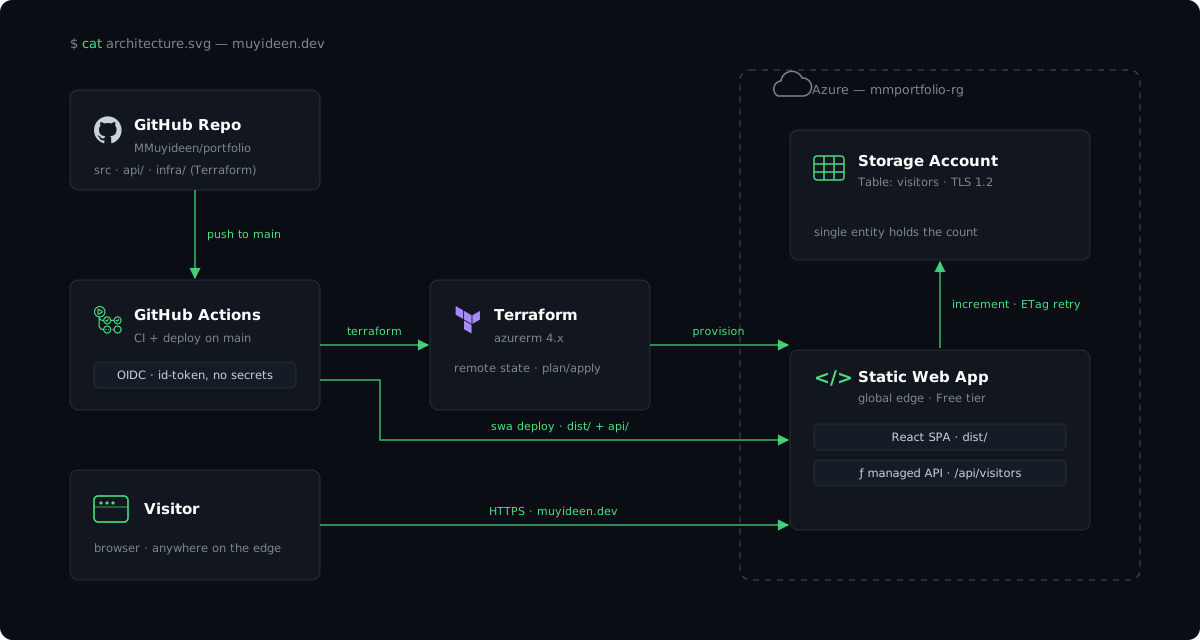
The frontend is Vite + React + TypeScript, built to a dist/ folder. Azure Static Web Apps serves it from a global edge, and also hosts the small Functions API that lives in api/ — no separate Function App to provision or pay for.
Terraform owns the infrastructure#
Everything in Azure is declared in a small Terraform root with two modules:
static_web_app— the SWA resource itself plus custom domains (dns-txt-tokenvalidation for the apex,cname-delegationforwww).visitor_counter— a Standard LRS storage account (TLS 1.2 minimum) with a single Table. Its connection string flows into the Static Web App’s app settings, so the API finds it at runtime without any manual configuration.
State lives in a remote Azure Storage backend, so applies are consistent from CI and from my laptop.
Keyless deploys with OIDC federation#
The GitHub Actions workflow logs into Azure with azure/login using OpenID Connect federated credentials — GitHub mints a short-lived token per run, Azure trusts it for this specific repository and branch, and there is no long-lived service-principal secret sitting in repository settings to leak or rotate.
permissions:
id-token: write
contents: read
- uses: azure/login@v3
with:
client-id: ${{ secrets.AZURE_CLIENT_ID }}
tenant-id: ${{ secrets.AZURE_TENANT_ID }}
subscription-id: ${{ secrets.AZURE_SUBSCRIPTION_ID }}
Those three values are identifiers, not secrets — the trust lives in the federated credential configured on the Entra ID app registration. After terraform apply, the same pipeline builds the site and pushes dist/ plus the API to Static Web Apps.
The visitor counter#
The number on the home page is a single entity in Table Storage, incremented by an anonymous Azure Function on every visit. The interesting bit is the concurrency handling: reads and writes race when several visitors land at once, so the function uses optimistic concurrency with ETags — read the entity, increment, write back with the ETag from the read, and retry on a 412 if someone else won the race.
const next = (Number(entity.count) || 0) + 1
await client.updateEntity(
{ partitionKey: 'counter', rowKey: 'visits', count: next },
'Replace',
{ etag: entity.etag },
)
No locks, no queues — for a counter this is exactly the level of machinery the problem deserves.
Small hardening details#
- Security headers are declared in
staticwebapp.config.json: a Content-Security-Policy scoped to the handful of origins the site actually uses,nosniff,frame-ancestors 'none', a referrer policy and a permissions policy. - The blog is markdown compiled at build time — frontmatter is parsed by a Vite plugin during the build, raw HTML in markdown is disabled, and each post’s body is code-split so the home page never downloads them.
- CI runs on every branch (lint, typecheck, build) before anything reaches
main, and Dependabot watches npm, GitHub Actions and the Terraform providers.
The whole thing costs almost nothing to run — the Static Web App is on the free tier, and the storage account bills fractions of a cent for the counter’s traffic. The repo is the case study: if you want to see any of this in detail, it lives on my GitHub.